
753: Regional Hypothermia Technique in R.A.Kidney Transplantation (RAKT): Coolant Gel Pad- M S Asari
This is one of the entries accepted for adjudication for the 2026 KS Innovation Awards, sponsored by the Vattikuti Foundation. Posting here does not imply being a Finalist.
Here is the Abstract:
A Novel, Simple, and Economical Regional Hypothermia Technique in Robot-Assisted Kidney Transplantation (RAKT): Application of a Coolant Gel Pad and Continuous Cold Drip
Author: Dr MS Ansari,
Institute: Sanjay Gandhi postgraduate institute of medical sciences,
Lucknow -India 22016
Email: ansarimsa@hotmail.com
Purpose:
Prolonged second warm ischemia time (SWIT) is a well-established risk factor for delayed graft function (DGF) and long-term allograft failure. Maintaining the allograft below 20°C during implantation significantly limits this warm ischemic injury.
However, the lengthy vascular anastomosis required in robot-assisted kidney transplantation (RAKT) increases the risk of graft rewarming, thereby extending the true functional SWIT. Because existing intracorporeal cooling techniques are frequently complex or cost-prohibitive, we describe a simple, economical alternative designed to maintain reliable regional hypothermia during RAKT anastomosis.
Methods:
We prospectively studied 32 consecutive RAKT recipients between August 2025 and August 2026. The first 8 (Arm I) received conventional intermittent external irrigation with 4°C saline (150 mL via a 50 mL syringe, 4–5 times); the
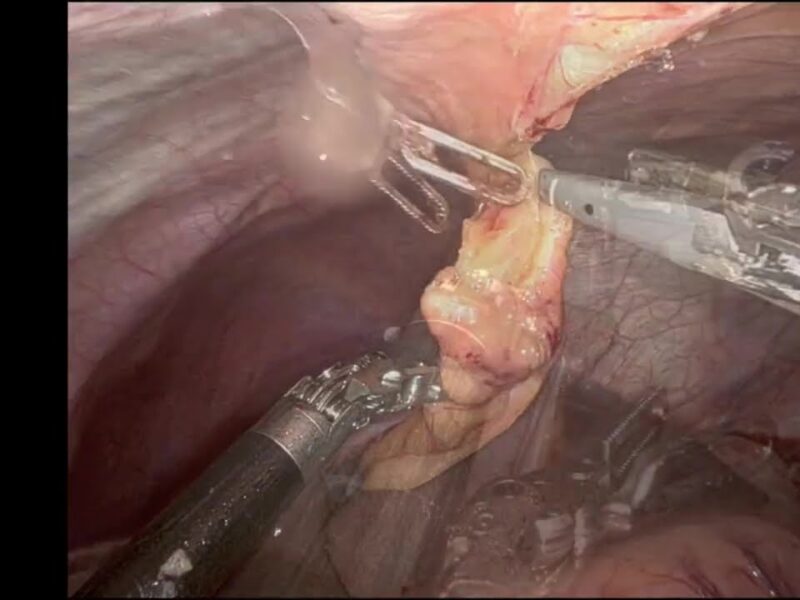
subsequent 24 (Arm II) received a novel cooling system of indigenous gel coolant pads (4–6°C) combined with a continuous cold saline drip delivered via perforated silicone tubing through a GelPoint port, housed within a gauze kidney jacket.
Allograft surface temperature was monitored throughout the anastomosis. Outcomes recorded were, SWIT, peak graft temperature, time to diuresis, acute tubular necrosis (ATN), and serum creatinine on post-operative day 10 and at last follow-up.
Continuous data are reported as median (range) and compared with the
Mann–Whitney U test; ATN was compared with Fisher’s exact test.
Results:
Donor kidney GFR (40 [37–48] vs 42 [35–48] mL/min, p = 0.58) and SWIT (61 [56–70] vs 59 [52–87] min, p = 0.66) were comparable between Arm I and Arm II. All
patients had single arterial and venous anastomoses except one in Arm II who required reconstruction of three arteries. In Arm I, intermittent irrigation transiently cooled the graft to a median of 7°C, but it rewarmed between flushes to a peak of 22.5°C (21–28°C), exceeding 20°C in all 8 cases. In Arm II, the peak temperature was 18.5°C (16–19°C), remaining below 20°C in all 24 cases (p less than 0.001). Urine
output began immediately on declamping in Arm II and after a median delay of 10 minutes in Arm I. ATN occurred in 4/8 (50.0%) patients in Arm I vs 2/24 (8.3%) in Arm II (p = 0.023). Serum creatinine was lower in Arm II on day 10, 1.15 [0.80–1.80] vs 1.50 [1.10–2.10] mg/dL, p = 0.013) and at last follow-up 1.15 [0.87–1.56] vs 1.40 [1.13–1.60] mg/dL, p = 0.013); median follow-up was 11 (10–12) months in Arm I and 6 (1–9) months in Arm II.
Conclusion:
A gel coolant pad combined with a continuous cold saline drip through a GelPoint port is a simple, cost effective and reproducible way to keep the allograft temperature below 20°C throughout RAKT anastomosis. It prevented graft rewarming and was associated with a lower incidence of ATN and superior early graft function.
See more at: http://vattikutifoundation.com/
Date
August 15, 2020