
Miami Friday Session 16: Spine & Orthopedics
The Vattikuti Foundation presented the 2026 Innovation in Medicine Summit and KS International Innovation Awards April 10–11, 2026, at the JW Marriott Marquis, Miami, Florida.
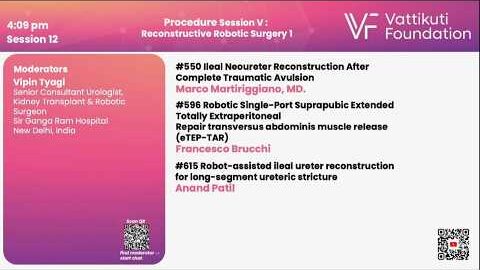
This year’s program is one of the most forward-looking yet. The two-day event brings together surgeons, engineers, and innovators from across the globe. This video is of the sixteenth session, Spine Orthopedics, with presentations from Prof. Bhavuk Garg- Robotics Redefining Reality: Transforming Complex Spinal Deformities and Dr. Suhas Masilamani- Robotic Assisted Remission TKR for a Failed Unicondylar Knee. Presentations, with robotic surgery videos PPT’s, group discussion, 18:01
See more at: https://vattikutifoundation.com/videos/
Date
August 15, 2020