
781: Robotic Mckeown’s Esophagectomy with Two-Field Lymphadenectomy- Karthik H.K.
This is one of the entries accepted for adjudication for the 2026 KS Innovation Awards, sponsored by the Vattikuti Foundation. Posting here does not imply being a Finalist.
Here is the Abstract:
Title: Robotic Esophagectomy with Two-Field Lymphadenectomy and Intraoperative Management of Bronchial Wall Rupture Following Neoadjuvant Chemoradiotherapy
Background:
Robotic esophagectomy provides enhanced visualization and precise dissection in the mediastinum, particularly in patients undergoing surgery after neoadjuvant chemoradiotherapy (CTRT). However, post-CTRT tissue fibrosis and adherence to adjacent structures may increase the risk of airway injury.
Case Presentation:
We present two cases of carcinoma esophagus following neoadjuvant chemotherapy and neoadjuvant CTRT, underwent robotic McKeown esophagectomy with two- field lymphadenectomy. The thoracic phase was performed robotically with meticulous
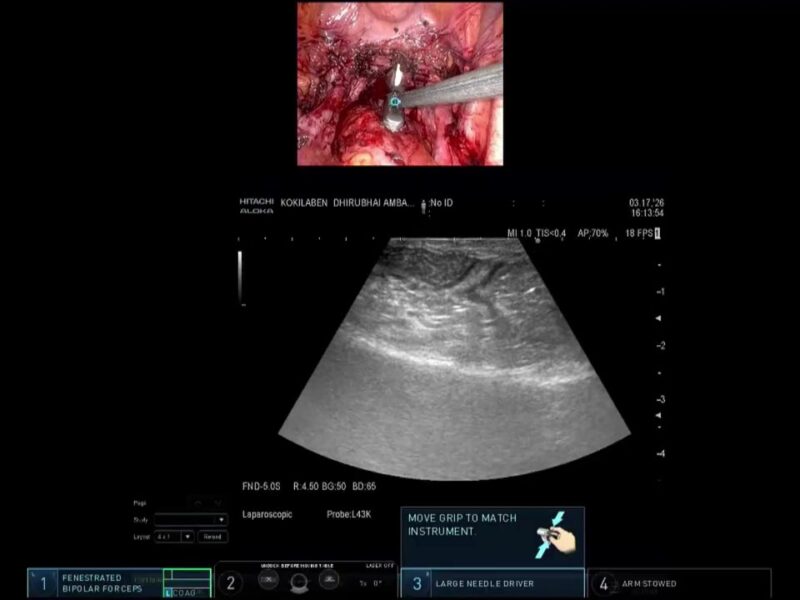
mediastinal dissection and systematic lymphadenectomy. During dissection of the tumor from the airway, one patient had an intraoperative bronchial wall rupture was identified. The injury was
promptly recognized and managed robotically with primary repair using PTEF sutures, ensuring adequate airway integrity and avoiding conversion to open surgery. The esophageal resection and reconstruction were subsequently completed with cervical esophagogastric anastomosis.
Results:
Both the patients had an uneventful postoperative recovery without clinical evidence of
anastomotic leak or respiratory compromise. Postoperative evaluation confirmed satisfactory
airway repair. The patient was discharged in stable condition.
Conclusion:
Robotic esophagectomy with two-field lymphadenectomy can be safely performed
following neoadjuvant CTRT despite challenging mediastinal fibrosis. Early recognition and
prompt robotic repair of an intraoperative bronchial injury can facilitate completion of the
procedure without conversion, highlighting the advantages of robotic visualization and instrument
articulation in managing complex airway injuries.
See more at: http://vattikutifoundation.com/
Date
August 15, 2020