
786: Robotic bilateral partial adrenalectomy in Von Hippel-Lindau disease- Ciara Lusnia
This is one of the entries accepted for adjudication for the 2026 KS Innovation Awards, sponsored by the Vattikuti Foundation. Posting here does not imply being a Finalist.
Here is the Abstract:
Robotic bilateral partial adrenalectomy in Von Hippel-Lindau disease
By: Ciara Lusnia, Nicole Carpio, Laura Zuluaga, Steven Hochwald, Akshay Bhandari
Presenting Author: Ciara Lusnia MD, Mount Sinai Medical Center, Ciara.Lusnia@msmc.com
Purpose:
Bilateral pheochromocytomas are a well-recognized manifestation of Von Hippel-Lindau (VHL) disease where total adrenalectomy would necessitate lifelong glucocorticoid and
mineralocorticoid replacement. We present a case of staged robotic bilateral partial adrenalectomies with aims of tumor resection while preserving adrenocortical function.
Methods:
A 29-year-old male with VHL disease found to have bilateral adrenal masses (3.2 centimeters (cm) right; 3.8 cm and 1 cm left) concerning for pheochromocytomas underwent staged robotic partial adrenalectomies, right followed by left with an interval of six weeks
between procedures. On the right, the adrenal vein was not dissected given the mass location and the enucleation plane identified. On the left, the splenorenal ligament was divided, vasculature was identified with selective clipping of a branch supplying the larger mass and two
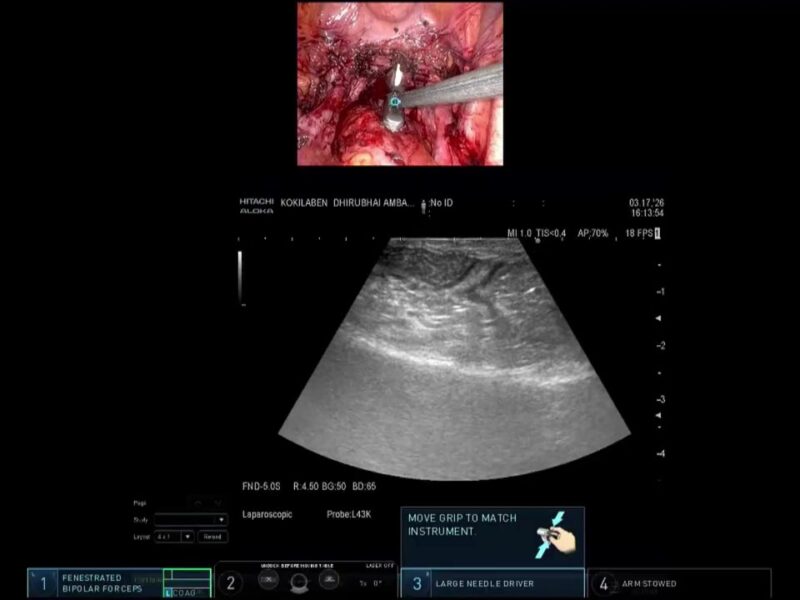
distinct masses were excised. Intraoperative ultrasound outlined each lesion prior to resection, and indocyanine green confirmed preservation of the adrenal remnant perfusion.
Results:
Both surgeries were completed without conversion to a total adrenalectomy. Intraoperatively the patient remained hemodynamically stable and postoperatively there were no complications. The patient was discharged without glucocorticoid or mineralocorticoid
replacement. Antihypertensive medication was discontinued after completion of the second surgery. Pathology confirmed pheochromocytomas bilaterally.
Conclusions:
In patients with bilateral adrenal masses concerning for pheochromocytoma in VHL, robotic partial adrenalectomy offers an effective means of achieving oncologic control while preserving adrenocortical function. A staged approach supported with intraoperative ultrasound guidance and indocyanine green for adrenal remnant perfusion assessment are valuable adjuncts for tumor localization.
See more at: http://vattikutifoundation.com/
Date
August 15, 2020