
794: Worlds First Robotic Simultaneous Liver-Kidney (SLK) Transplant- Adeel Khan
This is one of the entries accepted for adjudication for the 2026 KS Innovation Awards, sponsored by the Vattikuti Foundation. Posting here does not imply being a Finalist.
Here is the Abstract:
Title: World’s First Robotic Simultaneous Liver-Kidney (SLK) Transplant
Primary Contact: Adeel Khan, MD MPH
Primary Contact Institution Name: Washington University in St Louis, St Louis, Missouri,
USA
Primary Contacts Email: Akhan24@wustl.edu
Purpose:
Robotic approaches are increasingly adopted across transplant surgery. Robotic kidney transplantation (RKT) is becoming more prevalent worldwide, while robotic liver transplantation (RLT) remains technically demanding, with limited clinical experience. Robotic simultaneous liver-kidney (SLK) transplantation represents an important step toward extending minimally invasive surgery to complex multiorgan recipients.
Methods:
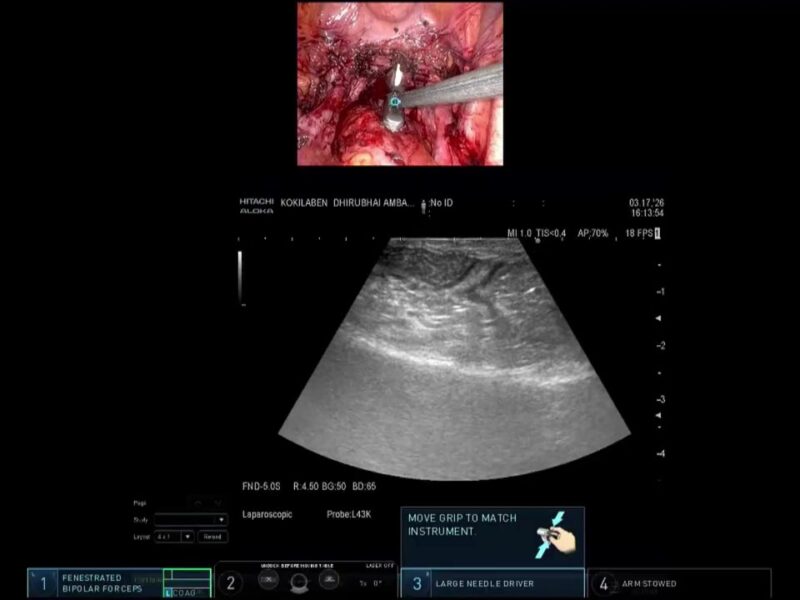
This is a video of the world’s first robotic SLK transplant, performed at Washington University in St. Louis. The video demonstrates port placement and key technical steps for both liver and kidney transplantation and describes patient outcomes and institutional
experience.
Results:
A 69-year-old man with alcohol-associated cirrhosis and end-stage renal disease secondary to hepatorenal syndrome (MELD 30) underwent robotic SLK transplant using
organs from a deceased donor. Liver transplantation was performed first, followed by kidney transplantation. Operative times were 9-hours for liver transplantation and 3-hours for kidney implantation. Warm ischemia times were 45 and 25 minutes, and liver cold ischemia time was 6 hours. Blood loss was 1,000 mL, requiring 4 units of blood. Both
organs demonstrated immediate function. The postoperative course was uncomplicated, and the patient was discharged on postoperative day 12 with excellent liver and kidney function and remained complication-free at last follow-up.
Conclusions:
Robotic SLK transplant is technically feasible in selected patients at experienced robotic transplant centers. This case builds on our institutional experience of more than 1,000 robotic procedures, including 12 robotic liver and 125 robotic kidney transplants. Further
experience and follow-up are needed to evaluate safety, reproducibility, and patient benefits.
See more at: http://vattikutifoundation.com/
Date
August 15, 2020