
699: Robot-Assisted Radical Nephrectomy with Inferior Vena Cava Tumor Thrombectomy- Mireia Musquera
This is one of the entries accepted for adjudication for the 2026 KS Innovation Awards, sponsored by the Vattikuti Foundation. Posting here does not imply being a Finalist.
Here is the Abstract:
Robot-Assisted Radical Nephrectomy with Inferior Vena Cava Tumor Thrombectomy
Mireia Musquera, Rita Pagés, Natalia Segura and Tarek Ajami
Hospital Clínic. Barcelona. mmusquer@clinic.cat
Introduction and objective
Renal cell carcinoma may extend into the venous system, requiring radical nephrectomy and
tumor thrombectomy. Although open surgery remains the conventional approach, robotic
surgery represents a minimally invasive alternative in selected patients. We present a robot-
assisted radical nephrectomy with inferior vena cava (IVC) tumor thrombectomy, highlighting
the key steps for safe vascular control and thrombus removal.
Case presentation and surgical technique
A 82-year-old male presented with a right infiltrative renal mass measuring 15 cm and an IVC
tumor thrombus classified as Mayo level I. Preoperative imaging showed no evidence of
metastatic disease.
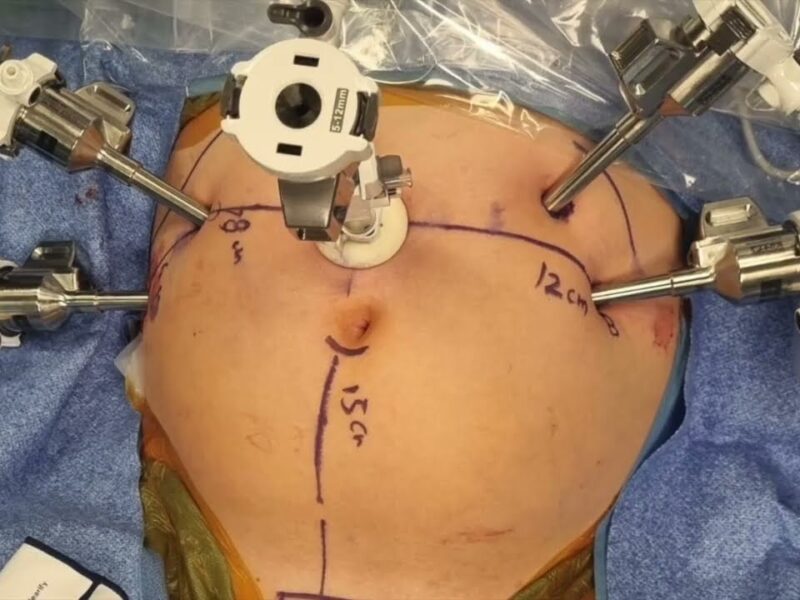
A transperitoneal robotic approach was performed. After colonic mobilization, the renal hilum
and IVC were exposed. Meticulous caval dissection allowed identification and control of the IVC
proximal and distal to the thrombus and the contralateral renal vein. Following vascular
clamping, cavotomy was performed and the tumor thrombus was completely removed without
fragmentation. Some extra bleeding was seen during thrombectomy due to a not ligated lumbar
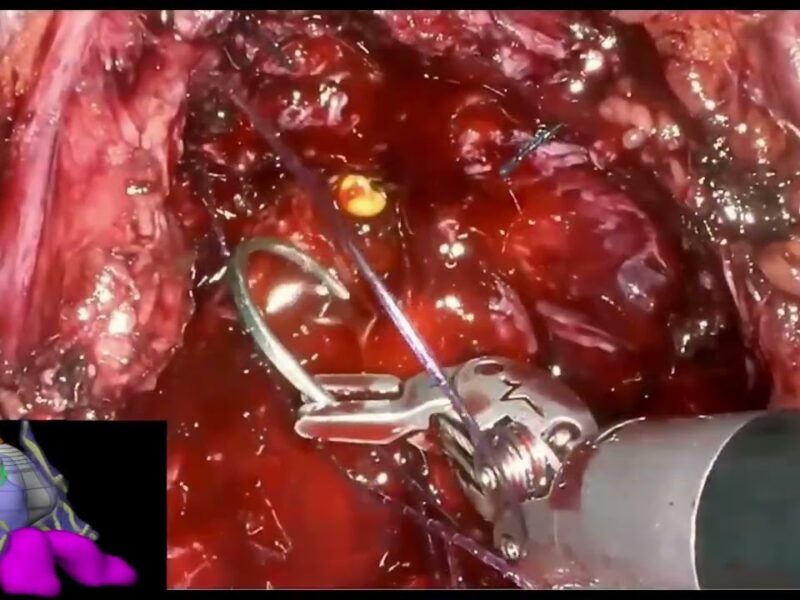
vein. The IVC was closed with a running 5/0 Goretex suture and vascular flow was restored after
confirming adequate hemostasis. Radical nephrectomy was subsequently completed.
Results
Operative time was 200 minutes, estimated blood loss was 1000 mL, and caval clamping time
was 15 minutes. The patient required intraoperative blood transfusion. No other intraoperative
complications occurred. The patient was discharged on postoperative day 8. Final pathology
revealed a ISUP 4 clear cell renal cell carcinoma, pT3bN0 with negative surgical margins. The
patient started adjuvant Pembrolizumab. After 8 moths the patient is alive, without tumor
recurrence and well tolerated treatment.
Conclusion
Robot-assisted radical nephrectomy with IVC tumor thrombectomy is feasible in selected
patients. Careful vascular dissection, adequate caval control and precise thrombus extraction
are key steps for safely performing this complex robotic procedure.
See more at: http://vattikutifoundation.com/
Date
August 15, 2020