
707: Robotic retrieval of an Embedded Inferior Vena Cava Filter Atanu Kumar Pal
This is one of the entries accepted for adjudication for the 2026 KS Innovation Awards, sponsored by the Vattikuti Foundation. Posting here does not imply being a Finalist.
Here is the Abstract:
Robotic-retrieval of an Embedded Inferior Vena Cava Filter
Longer title: Robotic Retrieval of an Embedded Inferior Vena Cava Filter: An Extension of Robotic IVC Thrombectomy Techniques
Authors: Atanu Kumar Pal (p), Irfan Hassan Rawther, Rohith P V Nair, George Kurien, Kishore TA
Aster Medcity, Kochi, Kerala, India
Presenting author’s email: atanub879@gmail.com
(*p=Presenting author)
Purpose:
Robotic-assisted surgery, as an extension of established robotic IVC thrombectomy techniques, offers a valuable minimally invasive option in complex Inferior vena cava (IVC) filter retrieval. We present a surgical video demonstrating robotic retrieval of an embedded IVC filter following failed endovascular attempts.
Methods:
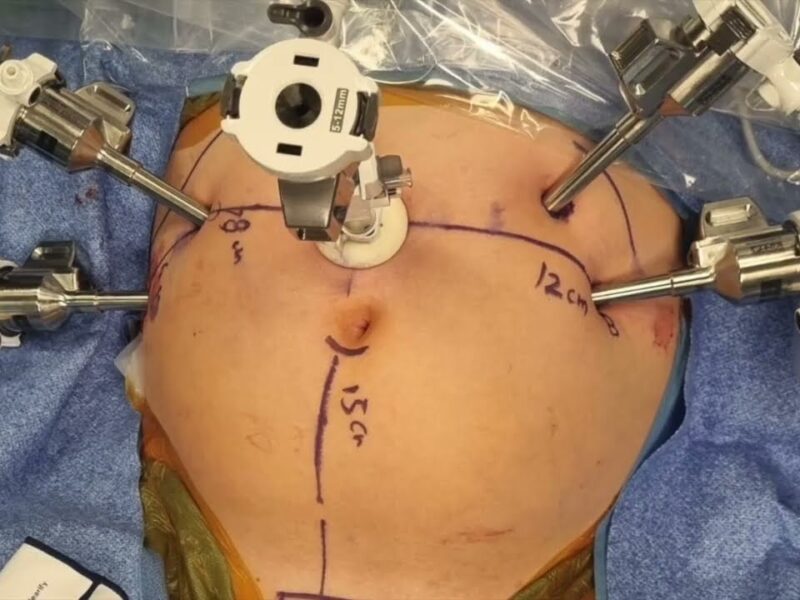
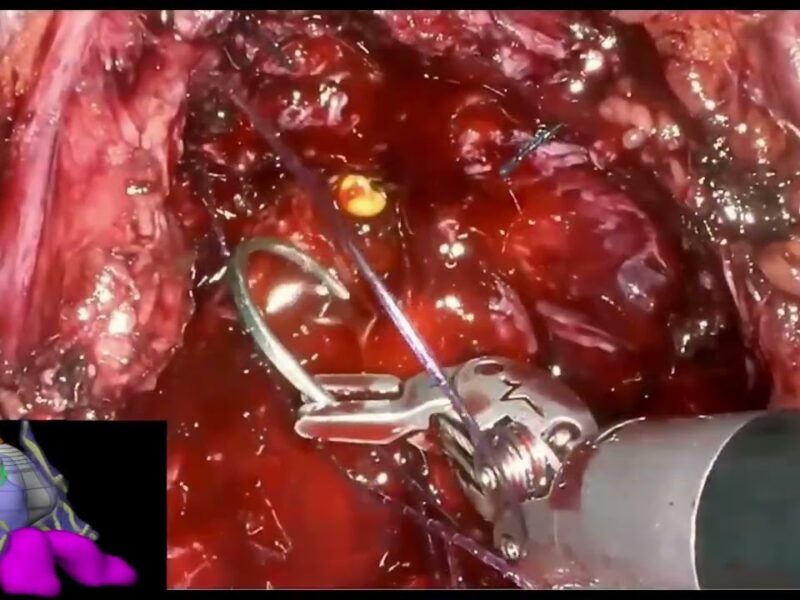
A 25-year-old female with a history of unprovoked deep vein thrombosis extending into the IVC with associated pulmonary embolism underwent infrarenal IVC filter placement one year earlier. Two prior endovascular retrieval attempts were unsuccessful due to significant filter embedment within the caval wall. Preoperative imaging demonstrated a patent IVC without thrombus or filter migration. Robotic-assisted retrieval was planned under general anesthesia. The procedure was performed by the Department of Urology owing to prior experience in robotic pelvic vascular dissection and robotic IVC thrombectomy. Using principles adapted from robotic IVC thrombectomy, robotic dissection of the infrarenal IVC and bilateral common iliac veins was performed with proximal and distal vascular control. Dense adhesions and venous rents were encountered during dissection. Percutaneous femoral
venous balloon assistance facilitated distal iliac control and safer dissection. Following ultrasound localization, venotomy was performed and the embedded filter was extracted robotically. Vascular repair was completed using Gore-Tex sutures. Estimated blood loss was 100 mL.
Results:
The patient remained hemodynamically stable postoperatively, had an uneventful recovery, and was discharged in stable condition on anticoagulation therapy.
Conclusion:
As an extension of robotic IVC thrombectomy techniques, the Robotic-assisted retrieval of embedded IVC filter provides great outcome while avoiding the morbidity associated with open surgery.
See more at: http://vattikutifoundation.com/
Date
August 15, 2020