
726: Robotic Assisted Secondary Cytoreduction in Case of Carcinoma Ovary- Urvangi Thacker
This is one of the entries accepted for adjudication for the 2026 KS Innovation Awards, sponsored by the Vattikuti Foundation. Posting here does not imply being a Finalist.
Here is the Abstract:
Robotic Assisted Secondary Cytoreduction in Case of Carcinoma Ovary
Presenter: Dr Urvangi Thacker
Institution: Narayana Health City, Bengaluru, Karnataka, INDIA
Email Id: turvangi3@gmail.com
Purpose:
High-grade serous carcinoma (HGSC) of the ovary is the most aggressive epithelial ovarian cancer. Recurrence is observed in nearly 70% of patients despite optimal treatment. Secondary cytoreductive surgery (SCS) improves outcomes in selected patients
The anatomical complexity of SCS, due to adhesions and recurrent disease distribution, can be addressed with the enhanced dexterity and three-dimensional vision provided by robotic
platforms, potentially improving surgical outcomes with reduced morbidity.
Case History & Management:
We report the case of a 52 year old lady previously treated with laparoscopic hysterectomy and bilateral salpingo-oophorectomy for uterine pathology elsewhere, post operatively diagnosed with HGSC of ovary by histopathology, followed by six cycles of adjuvant chemotherapy.
Interval cytoreductive surgery with HIPEC was performed at our centre in August 2023 for residual disease. On follow up, surveillance imaging revealed a pelvic cystic lesion suspicious for recurrence after disease free interval of 22 months hence, she was planned for robotic-
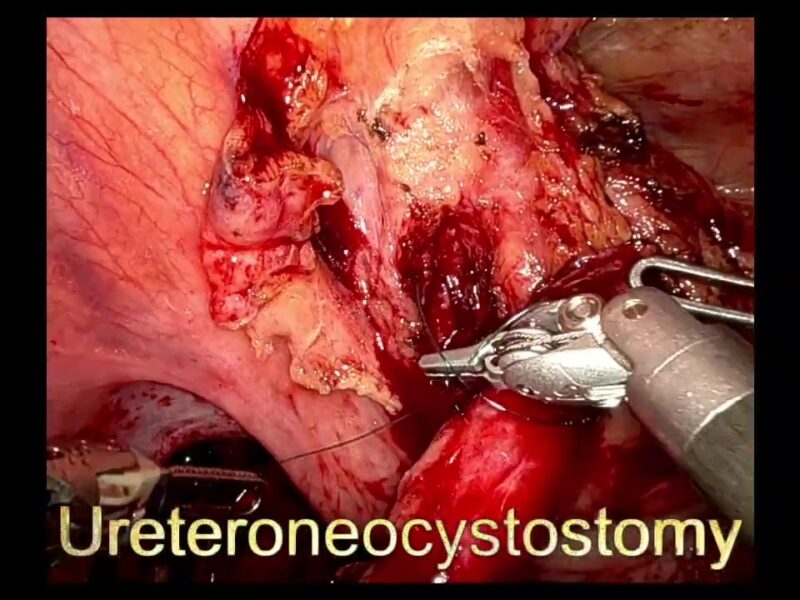
assisted SCS. Intraoperatively, following adhesiolysis, a vascular mass infiltrating the rectum was identified for which robotic-assisted lower anterior resection with transverse colostomy was also performed.
Results:
With the aid of advanced robotic technology, a complex case like carcinoma ovary with local recurrence involving multiple previous surgeries and dense adhesions was managed successfully without inadvertent injuries and large abdominal incision. The patient experienced an enhanced postoperative recovery with minimal complication.
Conclusion:
Robotic-assisted surgery is a feasible and effective option for secondary cytoreduction in localised recurrent ovarian carcinoma, enabling complete resection with enhanced postoperative recovery in carefully selected patients.
See more at: http://vattikutifoundation.com/
Date
August 15, 2020