
700: Safely scaling a robotic kidney transplant program- Alexander Cortez
This is one of the entries accepted for adjudication for the 2026 KS Innovation Awards, sponsored by the Vattikuti Foundation. Posting here does not imply being a Finalist.
Here is the Abstract:
Video title: Safely scaling a robotic kidney transplant program
Primary contact: Alexander Cortez, MD, Assistant Professor, Division of TransplantSurgery
Institution: Mayo Clinic, Rochester, Minnesota, USA
Email: cortez.alexander@mayo.edu
Safely scaling a robotic kidney transplant program: Launch, team-wide training and a novel simulation model
Purpose:
Robotic-assisted kidney transplantation (RAKT) is an emerging alternative to open transplantation, but its learning curve, early-experience risk and need for a coordinated team limit dissemination. We describe a transplant-specific simulation model as the foundation for launching and safely scaling an RAKT program.
Methods:
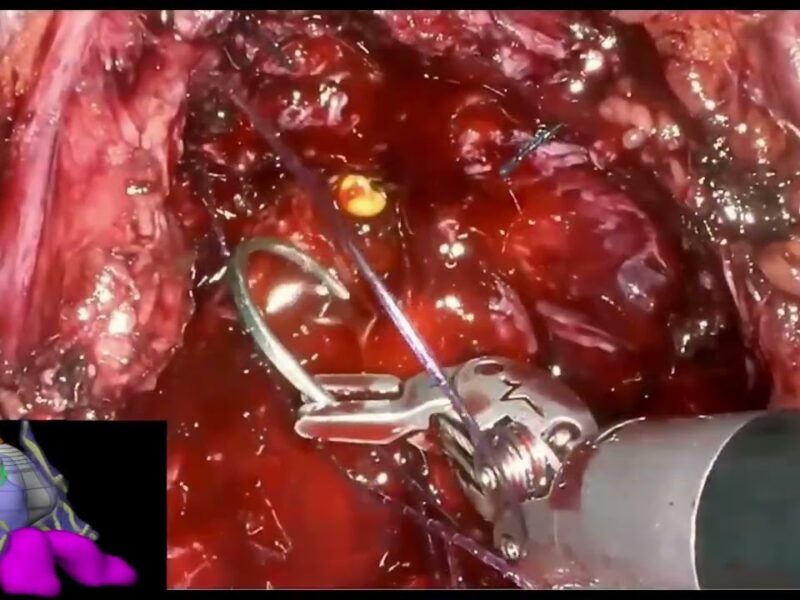
A silicone model reproducing the allograft, renal and iliac vessels, ureter and bladder was developed for the clinical robotic platform, enabling rehearsal of the complete implantation: venous and arterial anastomoses and ureteroneocystostomy.
Standardized setup ensured reproducibility. The model anchored a
competency-based pathway of simulation, bedside assistance and graded console
autonomy, requiring five simulated procedures before console work. We
retrospectively reviewed all RAKTs at a single center (October 2023–August 2026), comparing periods before and after a dedicated two-surgeon program launched in August 2025 with institutional support.
Results:
Experienced surgeons rated the model high-fidelity for tissue, orientation and angles. In the first program year, 31 RAKTs were performed versus 8 in the preceding 22 months (2.6 vs 0.35 per month), reaching 5.0 per month after training the entire kidney call team. Two surgeons performed 29 (94%) autonomously, including deceased-donor and bilateral native nephrectomy cases, plus four robotic
simultaneous pancreas-kidney transplants. Major complications (Clavien-Dindo ≥III)
occurred in 4 of 39 (10.3%), with 100% graft and patient survival.
Conclusions:
A high-fidelity, transplant-specific simulation model, supported by institutional commitment and team-wide training, facilitated rapid, safe RAKT program expansion. Formal validation and dissemination are planned.
See more at: http://vattikutifoundation.com/
Date
August 15, 2020