
727: Robot-Assisted exceresis of a sacral neurinoma- Pietro Piazza
This is one of the entries accepted for adjudication for the 2026 KS Innovation Awards, sponsored by the Vattikuti Foundation. Posting here does not imply being a Finalist.
Presenter: Dr. Pietro Piazza
University of Bologna
Pietro.piazza2@unibo.it
Purpose
Sacral schwannomas are rare benign nerve sheath tumors whose resection can be challenging because of their proximity to pelvic vessels and sacral nerves. We describe robot-assisted resection with multimodal intraoperative neurophysiological monitoring in a symptomatic patient.
Methods
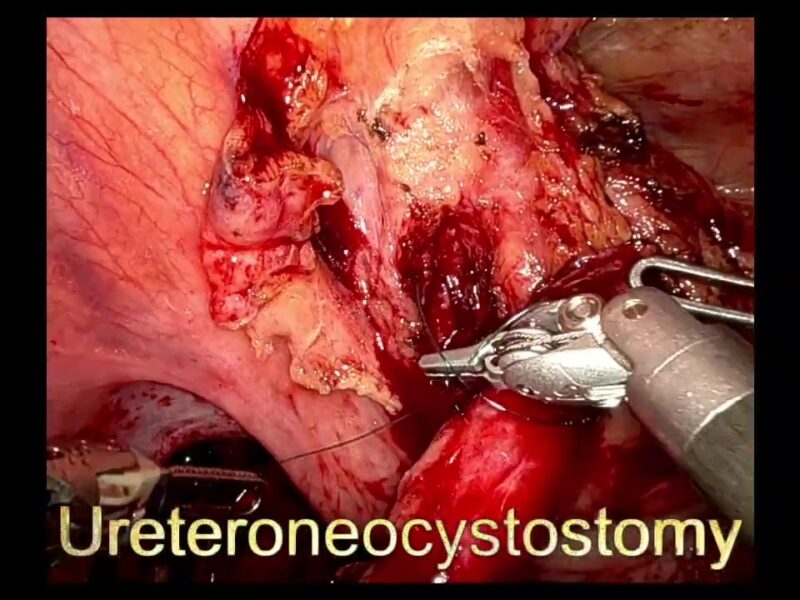
A 44-year-old man with low back pain and saddle dysesthesia underwent transperitoneal robot- assisted sacral schwannoma resection using a four-arm da Vinci Xi configuration. The procedure
was performed by an experienced robotic surgeon. Monitoring included transcranial motor evoked potentials, upper- and lower-limb somatosensory evoked potentials, the pudendal-anal reflex, free-
running electromyography, electroencephalography, and triggered electromyography using a bipolar probe to identify nerve roots. Motor responses were recorded from upper- and lower-limb muscles and the external anal sphincter.
Results
Total operative and console times were 180 and 140 minutes, respectively. Estimated blood loss was less than 50 mL. Motor, sensory, and sacral neurophysiological responses remained stable throughout the procedure and were comparable to baseline at completion. No intraoperative or postoperative complications were observed. The patient was discharged on postoperative day 2.
Conclusions
This single case demonstrates the feasibility of robot-assisted sacral schwannoma resection with multimodal neurophysiological monitoring and favorable perioperative outcomes. Real-time monitoring provided functional feedback during surgery. Additional cases and longer follow-up are needed to assess neurological outcomes, durability, and reproducibility.
See more at: http://vattikutifoundation.com/
Date
August 15, 2020